A River Runs Through It: BREL’s New Water Intake Channel
Published: March 4, 2026
When people think of Civeo, they think of welcoming workforce accommodations, flavourful meal services, energetic recreation facilities, and the thousands of guests we care for every year. But underpinning our hospitality services is a critical piece of infrastructure: on-site water and wastewater treatment.
Civeo’s Beaver River Properties, located north of Fort McMurray, Alberta, accommodates a peak population of over 3,000 people working in the region. As part of the site’s utility infrastructure, the BREL on-site potable water facility was commissioned in 2013, complementing the wastewater treatment facility that was completed in 2006.
“Traditionally, water required by lodges and camps are trucked to sites,” said Devin Doram, Sr. Manager, Maintenance & Utilities. “But these properties require an average of 192 litres of water per person per day and for a 200-person property, that amounts to about 38,400 litres of water every day. It just made sense operationally and financially to ratchet up our own methods and procedures to provide clean, safe water for our guests and operations.”
But with changing environmental conditions, methods and procedures would need to adapt to ensure a consistent and efficient intake of source water. The facility draws water directly from the Athabasca River, which has seen some of its lowest levels ever recorded due to persistent drought conditions across Alberta over the past several years.
Ebb and Flow

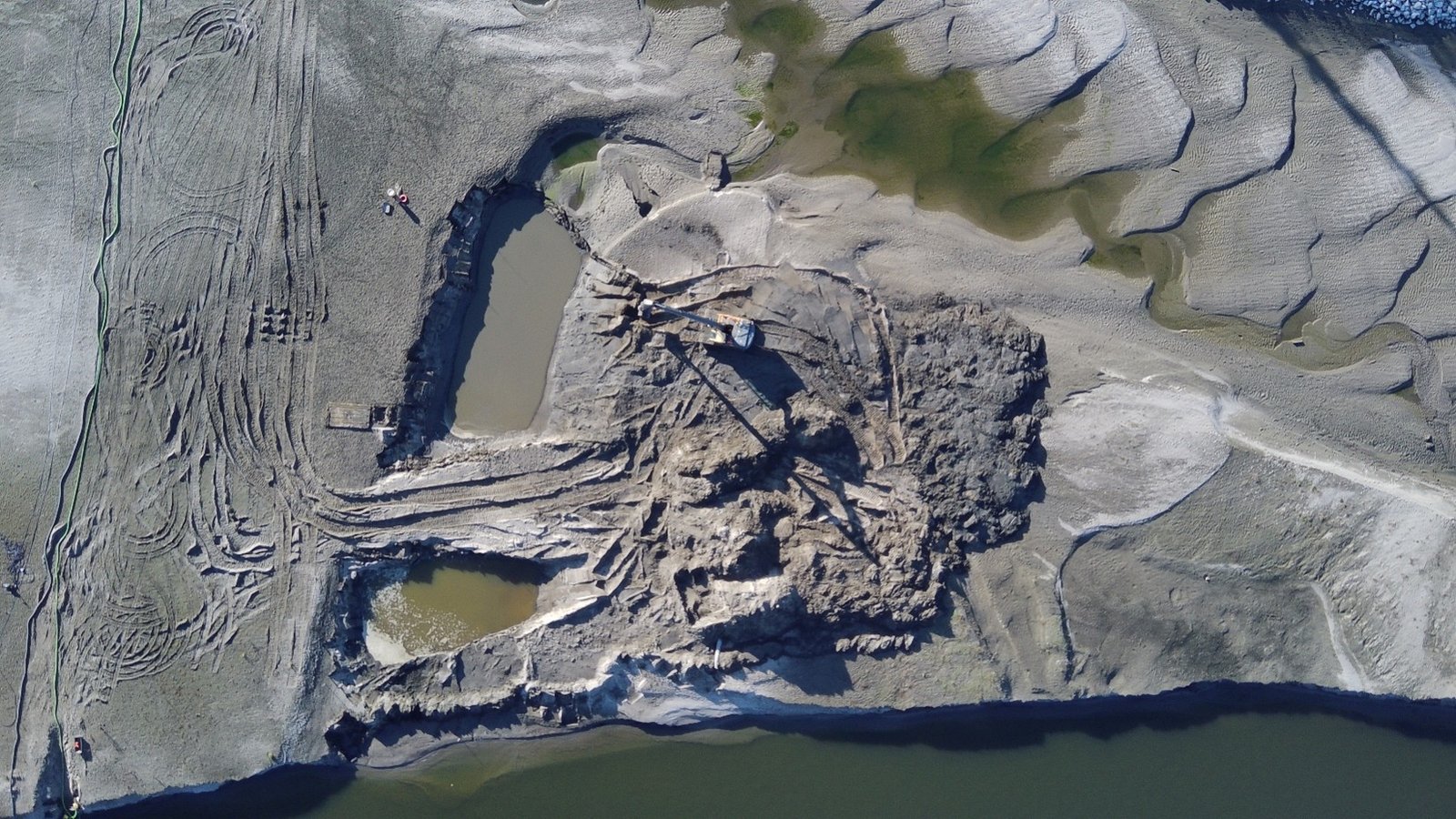
The BREL treatment facility relies on water entering a pumping station on the Athabasca River through an intake constructed under the riverbed. Over the past several years of low levels and shifting flow patterns, a large sandbar formed at this intake, reducing water flow into the collection area. A revetment — a fortified embankment — was built in 2024 to encourage the river’s natural flow pattern and help move the sand away from the area, but continued low river flow led to more settled sand.
“This year, you could just walk down from the bank right out onto the sandbar,” said Brett Koth, a Civeo Construction Manager working on the project.
As a short-term temporary measure to keep operations going, the facility team pumped water over the sandbar to get it to the collection area. But a more sustainable solution would require some bigger machinery.
The Big Dig

In early November 2025, blessed with balmy +0-degree Celsius temperatures, the Civeo team brought in dozers, excavators, and front-end loaders to dig a new channel and get the flow going again.
“Basically, we scooped out a bunch of sand, kind of like when you’re building sandcastles and trying to get the water into the moat,” Brett said. “And once you pull that plug, that water just rushes in! It was pretty cool to see.”
Of course, a riverbank engineering project is more complex than sandcastle moat digging. The soft “ground” conditions needed to be carefully navigated to ensure machinery didn’t get stuck or put anyone in danger. The weather was warm, so there was meltwater, ice floe, and unpredictability to contend with. Excavators and dozers balanced trenching and sand dispersal while Civeo water utility crews rigged and operated pumps and pipes to ensure continued flow of water to the facility during the project. An environmental company ensured there would be no negative impact on fish or the surrounding area during the project.
After five days of wet work boots and some sand between the toes, the Athabasca River was again flowing strongly into the BREL water treatment facility, which supports not just Civeo properties, guests, and operations, but a broad network of industrial and municipal users across the Athabasca region with both potable water supply and wastewater processing.

The BREL water treatment facility is just one example of Civeo’s long-standing commitment to water conservation and sustainability. In addition to helping lessen the strain on local water resources and infrastructure, the plant’s wastewater facility effectively processes waste, returning water back to the environment at purity levels higher than when it was originally acquired.
For now, existing intake maintenance may be all that’s needed to maintain water flow for this important facility. However, larger-scale solutions could be further downstream. If river levels continue to fluctuate, Civeo operations might just be bringing in a larger proverbial sand pail. But when your operations go beyond accommodations to encompass engineering expertise, environmental stewardship, long-term planning, and municipal-scale infrastructure, innovating new sustainable solutions is just part of what we do.

